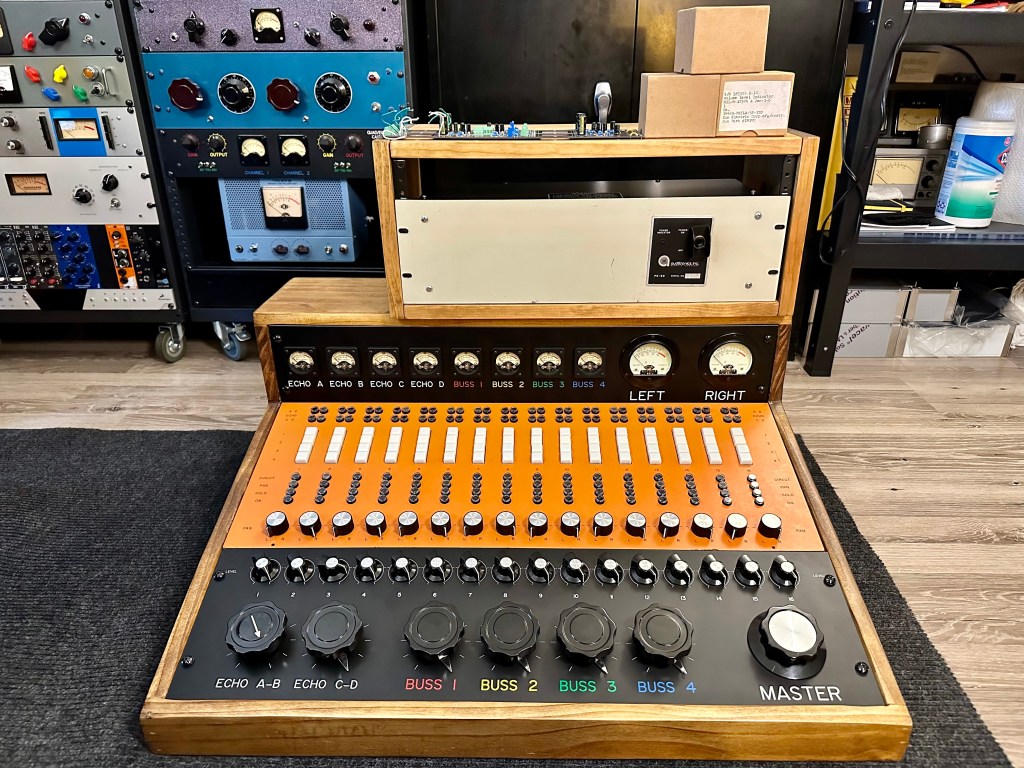
About a year back, I acquired an MCI JH-618 console from Reverb to replace my custom small-format Quad Eight summing mixer (pictured below). My aim was to find a unit with enhanced routing capabilities, inline mic preamps, and EQ. I had been reminiscing about our previous console, the Sony MXP-3036. The JH-618 offered many similar features but in a more compact design.
Over the last year, I’ve been slowing cleaning the console, replacing all the electrolytic capacitors, installing new API style 2520 opamp mic preamps (PCBs designed by Iron Age Audioworks, upgrading a couple channels with Opamp Labs 360BM mic preamps and upgrading the master buss ACA summing section with a CAPI ACA board. The MCI also requires two separate power supplies and only arrived with the audio power supply, so we built a fresh aux supply. Overall, it’s been a slow and tedious process but rewarding none the less.


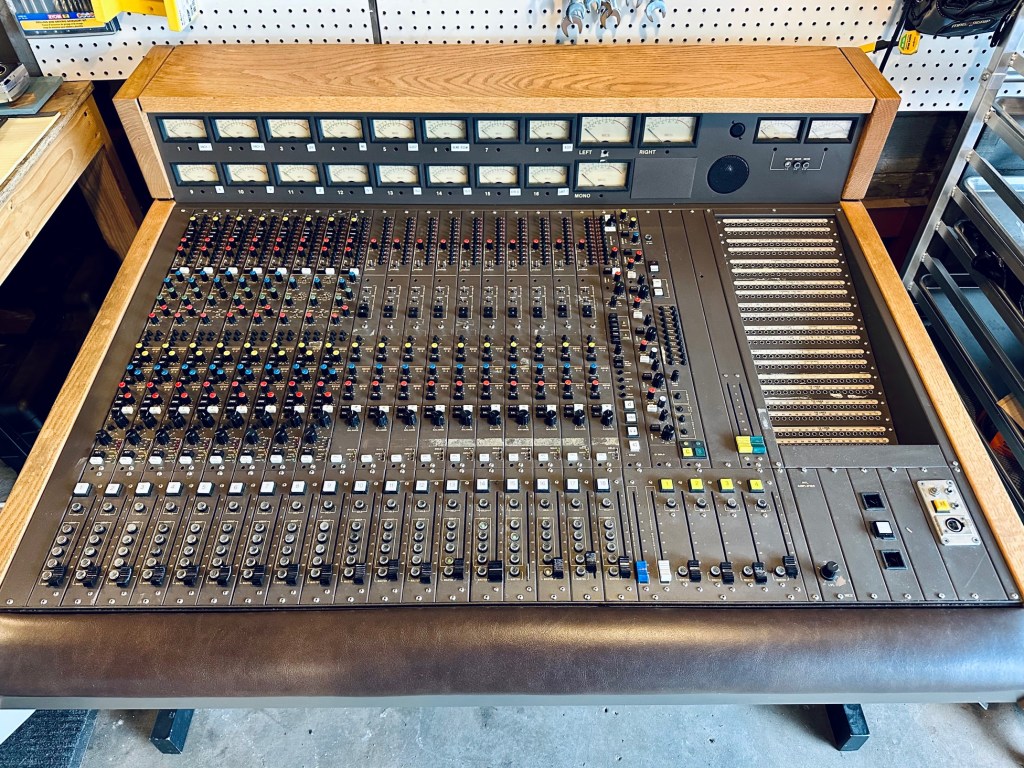
Our JH-618 was initially set up in a television station, resulting in a distinctive configuration. In this setup, the first 8 channels serve as standard input channels equipped with mic preamps and EQ, while the remaining 10 channels function as line-level stereo inputs. This actually works quite well, since our studio has a variety of outboard preamps / EQs and we typically mix down no more than 24 channels at a given time from the DAW or 8 channels from tape (before effects).
None of the line-level inputs on the console feature transformer balancing. To introduce extra saturation and harmonic distortion, I assembled a compact box containing 16 Triad transformers configured at a 1:1 ratio. Typically, I route the output from the DAW or tape recorder through these transformers.

I plan to share further updates and delve into more details in upcoming blog posts. This week, I’m preparing to mount and wire the CAPI ACA board. I’m excited to hear the effect it will have on the console’s overall sound.


 Downbeat Studio & Design
Leave a comment